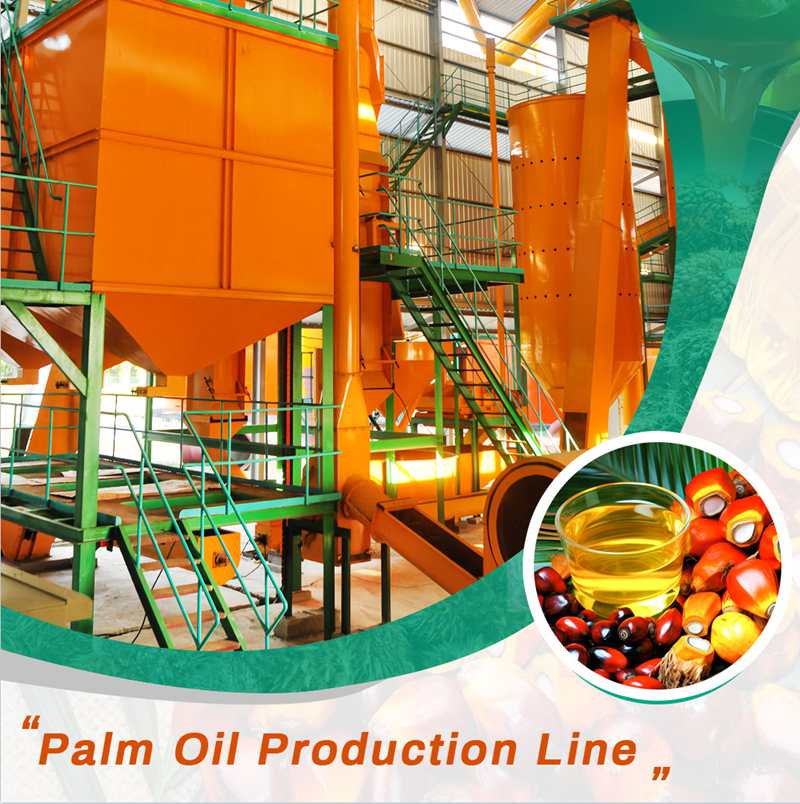
Locally Fabricated Palm Oil Processing Machine in Nigeria VS Huatai Modern Palm Oil Processing Machine
Nigeria is Africa’s largest producer and consumer of palm oil; however, a significant technological gap has long existed between locally fabricated palm oil processing equipment and modern industrial machinery. For investors planning palm oil processing projects, understanding the core differences between these two types of equipment is the first step toward making the right purchasing decision. This article compares locally fabricated palm oil milling equipment in Nigeria with the modern palm oil processing equipment produced by Henan Huatai Cereals & Oils Machinery Co., Ltd. across four dimensions: technical approach, processing capacity, oil extraction efficiency, and service systems.
Technical Status of Locally Fabricated Palm Oil Equipment in Nigeria
The manufacturing ecosystem for local palm oil processing equipment in Nigeria primarily serves small-scale growers and local artisanal workshops. These machines were originally designed to address the fundamental need for basic processing capabilities—enabling the initial pressing of scattered fresh fruit bunches (FFB) near the source to minimize transportation losses.
In terms of technical approach, local palm oil equipment typically employs batch sterilization, standalone pressing units, and manual or semi-automatic operation. Processing capacities generally range from 250 kg/h to 1.5 t/h, with an oil extraction rate of approximately 12% to 13% (based on FFB weight). While some local manufacturers have recently attempted to integrate fruit digestion and oil extraction into a single unit—marketing features such as “simple design to prevent clogging” and “savings in space, labor, and cost”—processing capacities remain around 500 kg/h, clearly targeting small-scale processors.
The core logic behind local equipment is low entry barriers, low costs, and suitability for small-scale operations. They address the need for basic processing capability rather than the pursuit of superior quality or efficiency. Due to limitations in manufacturing processes and material quality, this equipment faces significant performance ceilings regarding operational stability, consistency in oil extraction rates, and product grade control. Local palm oil milling equipment primarily produces crude palm oil; it struggles to consistently meet food-grade standards and lacks refining or fractionation capabilities.
Technical Characteristics of Huatai’s Modern Palm Oil Equipment: Industrial-Grade System Integration
Huatai’s palm oil processing equipment follows a completely different path. Take, for instance, the complete 6 t/h palm fruit oil extraction plant Huatai exported to Cameroon; this production line utilizes Huatai’s patented “dual-screw oil press specifically designed for palm fruit,” enabling a comprehensive production process that spans sorting, sterilizing, threshing and pressing to crude oil filtration. Its modular design is specifically tailored to the high-temperature, high-humidity environment of Africa, ensuring excellent adaptability and operational stability.
Huatai’s capabilities are even more outstanding in the palm oil refining stage. For a 100 t/d palm oil refining and fractionation plant delivered to the Democratic Republic of the Congo in 2025, Huatai provided everything from process design and manufacturing to intelligent control systems and full-line installation. Utilizing core equipment with proprietary intellectual property rights, the plant achieves world-class standards in product quality, system safety, and low-carbon emissions. Huatai’s intelligent systems aim to digitize and automate equipment, production, management, and maintenance services, thereby creating smart factories for clients.
For a client in Burundi, Huatai even delivered a combined 1 t/h palm fruit oil extraction and 2 t/d refining/fractionation unit. This system covers the entire process chain—including pretreatment, pressing, and refining—and employs a PLC-based automation control system. This demonstrates that Huatai’s product portfolio spans the entire capacity spectrum, ranging from 1 t/h extraction to 100 t/d refining, rather than being limited to a single capacity tier.
Comparison of Core Differences
| Comparison Criteria | Local Palm Oil Equipment in Nigeria | Huatai Modernized Palm Oil Equipment |
| Production Capacity | 250 kg/h to 1.5 t/h; max. ~500 kg/h per unit | 1 t/h (pressing) to 100 t/d (refining); covers the full spectrum from modular to industrial scale |
| Technical Approach | Batch sterilization; combined unit functions; manual/semi-automatic operation | Integrated end-to-end system; PLC automation; modular design |
| Oil Extraction Efficiency | 12%–13% (based on Fresh Fruit Bunches) | Uses specialized twin-screw pressing technology; significantly higher oil yield |
| Product Grade | Primarily produces crude palm oil; struggles to consistently meet food-grade standards | Produces refined palm oil meeting international standards; supports fractionation |
| Environmental Adaptability | Designed for local conditions, but manufacturing processes are limited | Optimized for Africa’s hot and humid climate; proven performance through exports to multiple countries |
| Service Model | Local manufacturing and delivery; limited technical support capabilities | After-sales service centers in 20 countries worldwide; provides installation, commissioning, and O&M support |
The differences in capacity and investment logic are fundamental. Locally produced equipment in Nigeria targets the “smallholder cooperative” market segment, the palm oil extraction rate is merely 11% to 15%. Although improved models introduced by local manufacturers in recent years have boosted individual machine efficiency, their processing capacity still confines clients to small-scale operations.
In contrast, Huatai’s equipment is designed for industrial-scale palm oil production. Consider large-scale palm oil enterprises in Nigeria, which typically process between 45 and 90 tons of fresh fruit bunches (FFB) per hour. Such enterprises require not merely a single press, but a complete EPC (Engineering, Procurement, and Construction) solution encompassing sterilization, threshing, pressing, clarification, kernel recovery, refining, and fractionation. Huatai’s project delivery track record in the Democratic Republic of the Congo and Burundi demonstrates that its capabilities align perfectly with the demands of this market segment.
Why the Nigerian Market is Shifting toward Modernized Equipment
Nigeria’s palm oil industry is undergoing a structural transformation. Driven by import substitution policies, investor demand for equipment has shifted from basic extraction to industrial-grade refining. Investors now prioritize technology that meets NAFDAC standards and maximizes oil extraction rates, rather than simply seeking the lowest initial investment cost.
Underlying this shift is a change in economic logic. While small-scale palm oil processing has a low barrier to entry, its cost structure and product quality make it difficult to sustain brand-building or achieve scalable profitability. The limited extraction rates of semi-mechanized processing mean that significant amounts of oil are lost in the fiber and wastewater for every ton of fresh fruit bunches (FFB) processed. For investors with long-term operational goals, this hidden loss is far more significant than the price difference in equipment procurement.
Huatai’s positioning in this transition is clear: it does not aim to replace all local equipment but rather to serve processing enterprises that have already established operations and are now seeking to upgrade from basic functionality to superior quality. For Nigerian investors who have secured an FFB supply base and wish to improve extraction rates, enhance product quality, and expand into refining and fractionation, Huatai’s modular design and end-to-end capabilities offer a scalable upgrade path.
Conclusion
The relationship between locally fabricated palm oil machine in Nigeria and Huatai’s modernized equipment is not a simple matter of “good versus bad,” but rather a fundamental difference in application scenarios. Local equipment meets the basic needs of small-scale processors and plays an irreplaceable role in Nigeria’s agricultural economy. However, for palm oil projects aiming for industrial-scale capacity, consistent product quality, and long-term investment returns, the technological limitations of local equipment are evident.
Huatai’s value lies in providing a complete technological progression—ranging from standalone presses to 100-ton-scale palm oil refining and fractionation plants—a pathway that has already been proven in multiple African countries. For Nigerian investors, the choice of equipment ultimately depends on a fundamental question: are you building a processing point, or are you building a factory?
Website: https://palmoilmachine.com/
Email: info06@cnoilmachine.com


