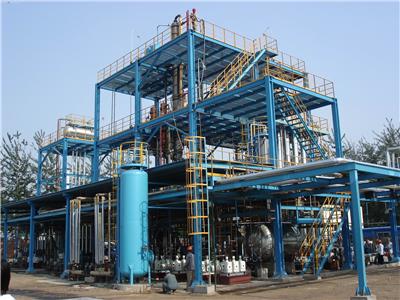
How to Make Biodiesel from Palm Oil?
Against the backdrop of the global energy transition and carbon neutrality goals, biodiesel is garnering increasing attention as a clean, renewable alternative fuel. Thanks to advantages such as high yield, low cost, and good stability, palm oil has become a key feedstock for global biodiesel production. With the implementation of Indonesia’s B40 policy and the advancement of the B50 plan, the strategic importance of palm oil in the biodiesel sector continues to rise.
So, how exactly is palm oil converted into biodiesel? What core equipment and technologies are required for this process? And what solutions can Henan Huatai Cereals & Oils Machinery Co., Ltd. provice—a leading enterprise in China’s grain and oil machinery industry? This article answers these questions.
-
Process Principles of Biodiesel Production from Palm Oil
The core chemical reaction in producing biodiesel from palm oil is transesterification. Simply put, this involves converting the triglycerides found in palm oil—using methanol (or another short-chain alcohol) and a catalyst—into fatty acid methyl esters (biodiesel) and a glycerol by-product.
For crude palm oil with a high free fatty acid (FFA) content, a two-step process is typically required:
Step 1: Acid-catalyzed esterification—Using an acid catalyst (such as sulfuric acid) to convert free fatty acids in the palm oil into fatty acid methyl esters, thereby reducing the FFA content.
Step 2: Alkali-catalyzed transesterification—Using an alkaline catalyst (such as sodium hydroxide or sodium methoxide) to facilitate the transesterification reaction between triglycerides and methanol, producing biodiesel.
-
Complete Process Flow for Biodiesel Production from Palm Oil
1) Raw Material Pretreatment
Crude palm oil contains substances such as moisture, impurities, and gums, which can reduce biodiesel yield and impair catalyst activity. Therefore, the palm oil requires pretreatment before production; this involves steps such as filtration and centrifugal separation to remove impurities and gums, water washing for neutralization, and heating to approximately 90°C to remove moisture.
2) Esterification/Transesterification Reaction
A one-step or two-step process is selected based on the quality of the raw material. The pretreated palm oil is mixed with methanol in a specific ratio, a catalyst is added, and the reaction proceeds at an appropriate temperature. Huatai Oil Machinery’s complete biodiesel equipment utilizes an advanced enzymatic catalysis process, capable of boosting the conversion rate to 98%.
3) Separation and Purification
Upon completion of the reaction, the product separates into two layers—biodiesel (fatty acid methyl esters) and glycerol—which are then separated using a separator. The crude biodiesel undergoes further purification: three-stage vacuum distillation and processes such as desulfurization result in the production of bio-light oil, biodiesel, bio-heavy oil, and vegetable pitch.
4) Finished Product Testing
The final product must meet quality standards. Biodiesel produced by Huatai Oil Machinery complies with EU standards and satisfies the rigorous requirements of the international market.
-
Henan Huatai Oil Machinery: Expert in Complete Palm Oil Biodiesel Equipment
1) Company Strength and Industry Status
Henan Huatai Cereals & Oils Machinery Co., Ltd. was established in 1988. Headquartered in Hua County, Anyang City, Henan Province, the company is a large-scale manufacturer of grain and oil machinery, integrating R&D, design, manufacturing, and installation. It covers an area of 00,000 square meters and is equipped with 12 intelligent workshops and 120 units of production equipment.
2) Core Advantages of Complete Biodiesel Equipment
Leading Technology and High Conversion Rate
The enzymatic catalysis process developed by Huatai Oil Machinery for its biodiesel equipment can raise the conversion rate to 98%. The products meet EU standards and have been successfully utilized in numerous national-level new energy projects.
Comprehensive One-Stop Solution
The company provides turnkey solutions for intelligent, complete equipment sets—covering oil pretreatment, solvent extraction, and refining—with capacities ranging from 10 to 2,000 tons per day. The annual processing capacity of the biodiesel equipment systems can reach 200,000 tons.
Patent Cluster for Specialized Palm Oil Equipment
Huatai Intelligent Equipment Group has secured nine national patents for palm oil processing equipment, covering core machinery such as vertical sterilizers for palm fruit, shaftless drum-type fruit threshers, complete palm oil production lines, and specialized palm fruit oil presses. The sterilization tanks feature fully automated control systems, resulting in labor and steam savings alongside stable system operation.
Automation and Intelligent Control
The palm oil production line utilizes advanced automation control systems to precisely regulate key parameters—such as temperature, pressure, and material ratios—thereby significantly reducing manual labor intensity and operational errors while ensuring a stable, safe, and efficient production process.
3) Global Project Experience
Huatai Oil Machinery’s products have been exported to over 70 countries and regions worldwide. A 50 TPD (tons per day) palm oil refining and fractionation project undertaken by the company in Peru achieved successful commissioning on the first attempt; the project earned high praise from the client for its excellent oil quality and low consumption rates. The company is capable of constructing palm oil processing plants with capacities ranging from 10 to 1000 tons per day, offering turnkey solutions that encompass everything from plant layout design and machinery manufacturing to on-site installation and commissioning.
-
Promising Outlook for the Palm Oil Biodiesel Industry
The global palm oil biodiesel industry is currently entering a period of rapid growth. In 2025, Indonesia will implement the B40 policy, raising the biodiesel blending ratio in diesel fuel to 40%, with plans to upgrade to B50 starting in 2026. Upon the implementation of B50, the demand for crude palm oil is projected to reach 19 million tons. Market forecasts indicate that Indonesia’s B50 policy will generate an additional annual demand for palm oil of 2 to 3 million tons.
Malaysia has also implemented the B15 policy. As major palm oil-producing nations in Southeast Asia continue to advance their biodiesel policies, the market for palm oil-based biodiesel is set to expand, driving a steady increase in the demand for specialized equipment.
-
Conclusion
The process of transforming palm oil into high-quality biodiesel involves multiple stages—including pretreatment, esterification/transesterification, and separation/purification—each requiring specialized technology and equipment. Leveraging 38+ years of industry experience, 87 patented technologies, and core strengths such as enzymatic catalysis processes, Henan Huatai Cereals & Oils Machinery Co., Ltd. provides global clients with customized services ranging from individual equipment units to complete production lines.
If you have requirements regarding palm oil processing or biodiesel production, please contact us for professional technical consultation and comprehensive solutions.
Website: https://palmoilmachine.com/
Email: info06@cnoilmachine.com


